HDI PCB Manufacturing Service for High Density and Compact Electronic Devices -Hitech Circuits

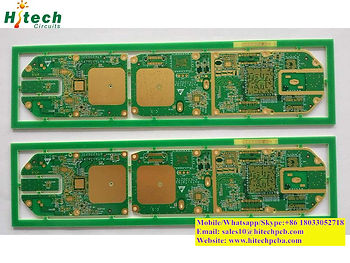
As modern electronic products continue to become thinner, smaller, and more powerful, HDI PCB manufacturing technology has become increasingly important in advanced electronics production. HDI PCB, also known as High Density Interconnect PCB, is widely used in smartphones, industrial control systems, medical devices, automotive electronics, communication equipment, and embedded computing applications.
Compared with traditional multilayer PCB structures, HDI PCB technology offers higher wiring density, smaller via size, finer line width and spacing, and improved signal performance. By using microvias, blind vias, buried vias, and sequential lamination technology, HDI PCB designs can achieve higher circuit complexity within limited board dimensions.
One of the biggest advantages of HDI PCB manufacturing is the ability to reduce product size while improving electrical performance. Shorter signal transmission paths help reduce signal loss, electromagnetic interference, and transmission delay, which is especially important for high-speed digital systems and RF communication devices.
Advanced HDI PCB fabrication usually involves laser drilling technology, high precision exposure equipment, automated optical inspection, impedance control processes, and strict layer alignment management. Manufacturing accuracy becomes increasingly critical as PCB structures become more complex and component density continues to increase.
Microvia technology is one of the key features of HDI PCB design. Compared with mechanically drilled vias, laser microvias occupy less space and allow designers to route more signals within compact board layouts. This technology is especially useful for BGA fan-out designs and fine-pitch component assembly.
Modern industrial electronics and embedded systems often require multilayer HDI PCB structures combined with advanced SMT assembly technology. High layer count HDI boards can support powerful processors, FPGA platforms, memory modules, and high-speed communication interfaces while maintaining stable electrical performance and thermal reliability.
HDI PCB manufacturing also places higher demands on material selection. Low-loss materials, high Tg laminates, and high reliability copper foil structures are commonly used in high-speed and high-frequency applications. Proper stack-up design and impedance control are essential for maintaining signal integrity.
A professional HDI PCB manufacturer should provide complete engineering support including DFM analysis, stack-up optimization, impedance calculation, thermal analysis, and production feasibility review. Early engineering evaluation can significantly improve manufacturing yield and reduce development risk.
As electronic products continue moving toward miniaturization and high-speed performance, HDI PCB service capability has become one of the most important competitive advantages in advanced PCB manufacturing industries worldwide.
Mobile/Whatsapp/Skype:+86 18033052718
Email: sales10@hitechpcb.com
Website: www.hitechpcba.com
#pcb #pcbassembly #electronics #pcbmanufacturing #pcbdesign #components #aluminiumpcb #metalcorepcb #hdipcb #production #factory #innovation #industry #prototype #turnkey


留言